

For practice managers, GP partners and dental practice owners
First Aid & Trauma Training for GP and Dental Practices
Healthcare practices need training that reflects the situations their own teams may encounter, not generic workplace examples involving warehouses and ladders. Sessions are built around your staff, your rooms and your equipment.
Tailored delivery
Training built around healthcare teams
A practice is not one uniform group. Reception staff, nurses, dentists, dental nurses and managers all have different starting points and different roles in an emergency.
Clinical and non-clinical staff
Everyone trained together where useful, with content pitched so nobody is left behind or held back.
Different experience levels
Refresher-level content for experienced clinicians alongside clear fundamentals for administrative staff.
Practice environments
Scenarios set in reception, the waiting room, treatment rooms and the surgery itself.
Team size
Sessions sized for your team, or split across shifts and half-days to keep the practice running.
Relevant emergency scenarios
Collapse, chest pain, anaphylaxis, choking, seizures, significant bleeding and patient deterioration.
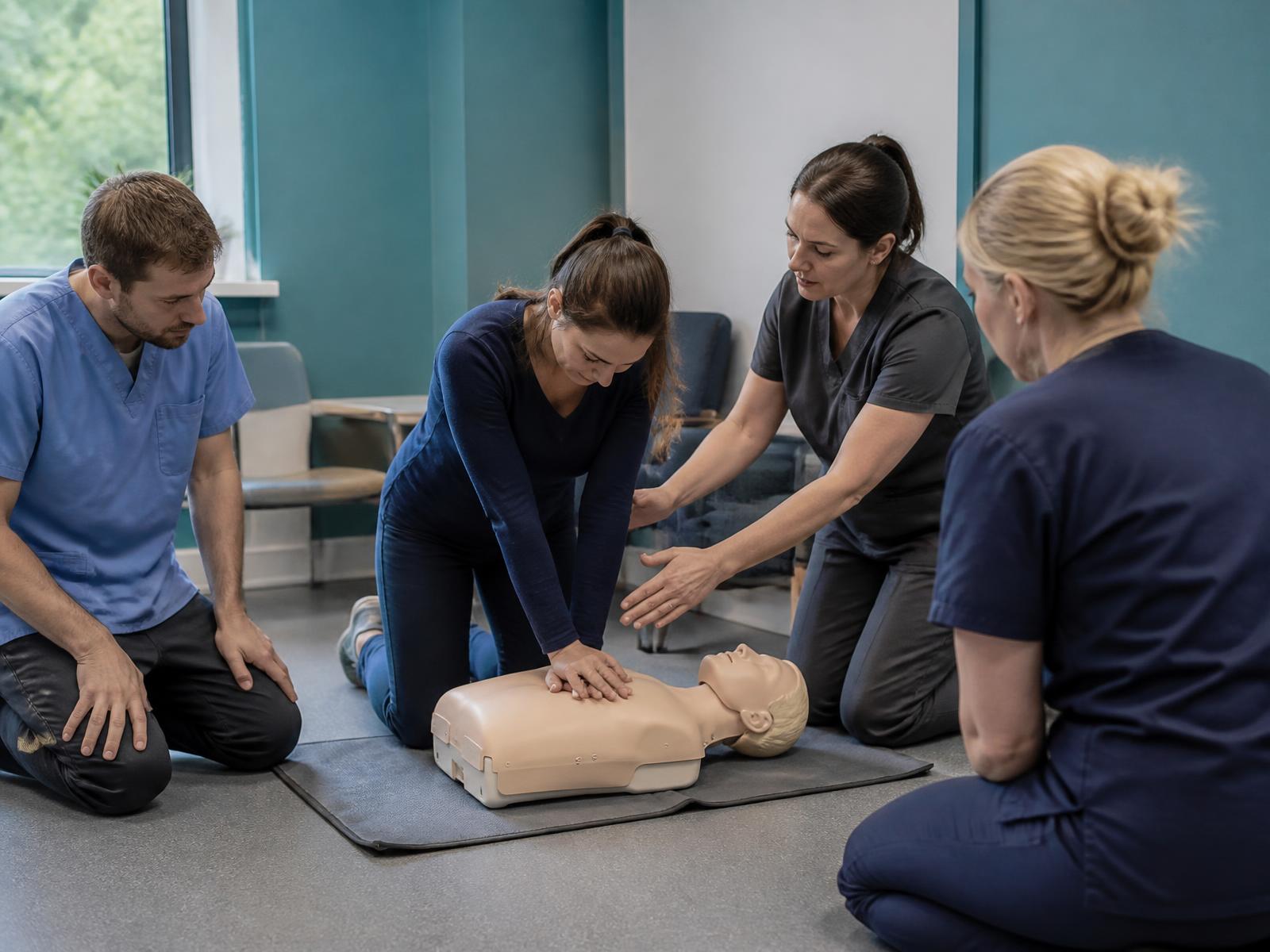
Practical training
Hands-on practice, not a slideshow
Confidence comes from having done something before. Sessions prioritise practical repetition (compressions, airway management, defibrillator use, bleeding control) so the team has physically performed the skills.
- Courses accredited by Qualsafe Awards
- All training delivered by a HCPC registered Paramedic
- Scenario-based practice
- Familiarity with your own emergency kit
- Clear team roles and communication
- Time to ask awkward questions
- Realistic pace and pressure
- Debrief and learning points
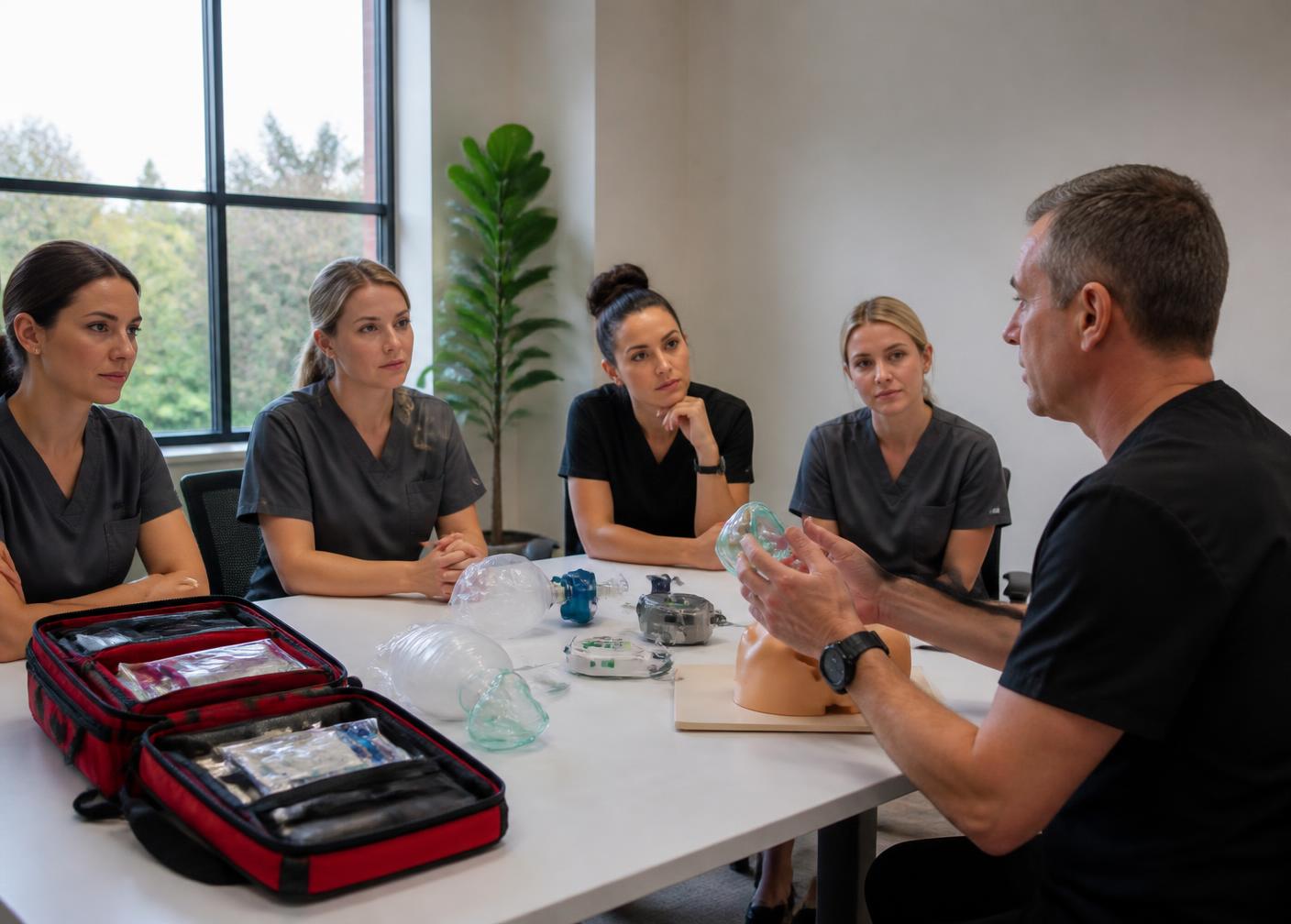
Bespoke delivery
A conversation before a recommendation
Nothing is proposed until your requirements are understood. That conversation usually takes fifteen minutes and saves booking training that does not fit.
Tell us what you need to cover
Whether that is a CQC-related requirement, a gap the team has noticed, or an incident that prompted the enquiry.
We adapt the content
Emphasis shifts to what matters for your practice, and unnecessary material is left out.
You get it in writing
Session outline, duration, numbers, certification and cost confirmed before you commit.
Who the training is for
Practices and healthcare organisations
GP surgeries
Whole-team sessions covering emergencies in clinical rooms and public areas.
Dental practices
Medical emergencies chairside, with a small team and limited space.
Primary care teams
Community, PCN and clinic teams working across more than one site.
Other healthcare organisations
Clinics, therapy practices and providers needing relevant, practical training.
What to expect
From first enquiry to certification
- 01
Tell us about your practice
Type of practice, team size and location; a short enquiry is enough.
- 02
Discuss requirements
A brief conversation about what the team needs and any previous training.
- 03
Agree the session
Course, duration, numbers and date confirmed in writing with costs.
- 04
Training delivered
Practical, on-site delivery arranged around your clinical timetable.
- 05
Certification provided
Documentation and certification supplied where applicable to the course.
Questions about numbers, refresher intervals or coverage are answered on the FAQ page.
Arranging training for your practice?
Send your practice details, approximate staff numbers and what you would like covered. You will receive a clear recommendation and a written quotation you can share internally for approval.